
Why Single-Car Advertised Rates Mislead Multi-Car Households
You see a carrier advertising low rates for one car, add your second and third vehicles to the quote, and the combined premium jumps higher than a competitor whose single-car rate looked expensive. The structural reality: carriers apply the multi-car discount to different base rates, and a smaller discount on a lower base rate often beats a larger discount on a higher one. Illinois households insuring two or more vehicles cannot identify the cheapest carrier by looking at advertised single-car rates.
The state requires every driver to carry at least $25,000 bodily injury per person, $50,000 per accident, and $20,000 property damage. Uninsured motorist coverage is mandatory. Those minimums apply to every vehicle on your policy. The cheapest carrier for your household is the one that writes the lowest combined premium across all your cars while meeting those state requirements, not the one with the flashiest single-car ad.
Compare car insurance rates in your state
Get quotes from licensed carriers — no obligation, no spam, results in minutes.
Get Your Free QuoteIllinois Multi-Vehicle Roster
27 carriers
Twenty-seven carriers write auto policies in Illinois and accept multiple vehicles on one policy. The roster includes standard-tier carriers like State Farm and Allstate, non-standard carriers like Bristol West and The General, and online-first carriers like Root and Clearcover.
Illinois Department of Insurance carrier licensing data
The Multi-Car Discount Requires Every Vehicle on One Policy
The multi-car discount applies only when every vehicle sits on the same policy, issued to the same named insured, and typically garaged at the same address. A vehicle titled to a household member on a separate policy does not count toward your multi-car discount, even if you live in the same house. Illinois households adding a second or third car must consolidate every vehicle onto one policy to access the discount.
Carriers structure the discount differently. Some apply a percentage reduction to each vehicle after the first. Others reduce the base rate for the entire policy once a second vehicle is added. A few carriers tier the discount so the third and fourth vehicles receive larger reductions than the second. You cannot predict which carrier will be cheapest for your household without quoting every vehicle together on the same application.
The state does not regulate how carriers calculate or apply the multi-car discount. A carrier advertising a large discount may start from a higher base rate. Another carrier may advertise no discount but price every vehicle lower from the start. The only way to identify the cheapest option is to compare the final combined premium after all discounts are applied, not the advertised discount percentage.
A vehicle titled to someone outside your household or on a separate policy does not qualify for your multi-car discount, even if garaged at your address.
How to Compare Carriers for Multiple Vehicles
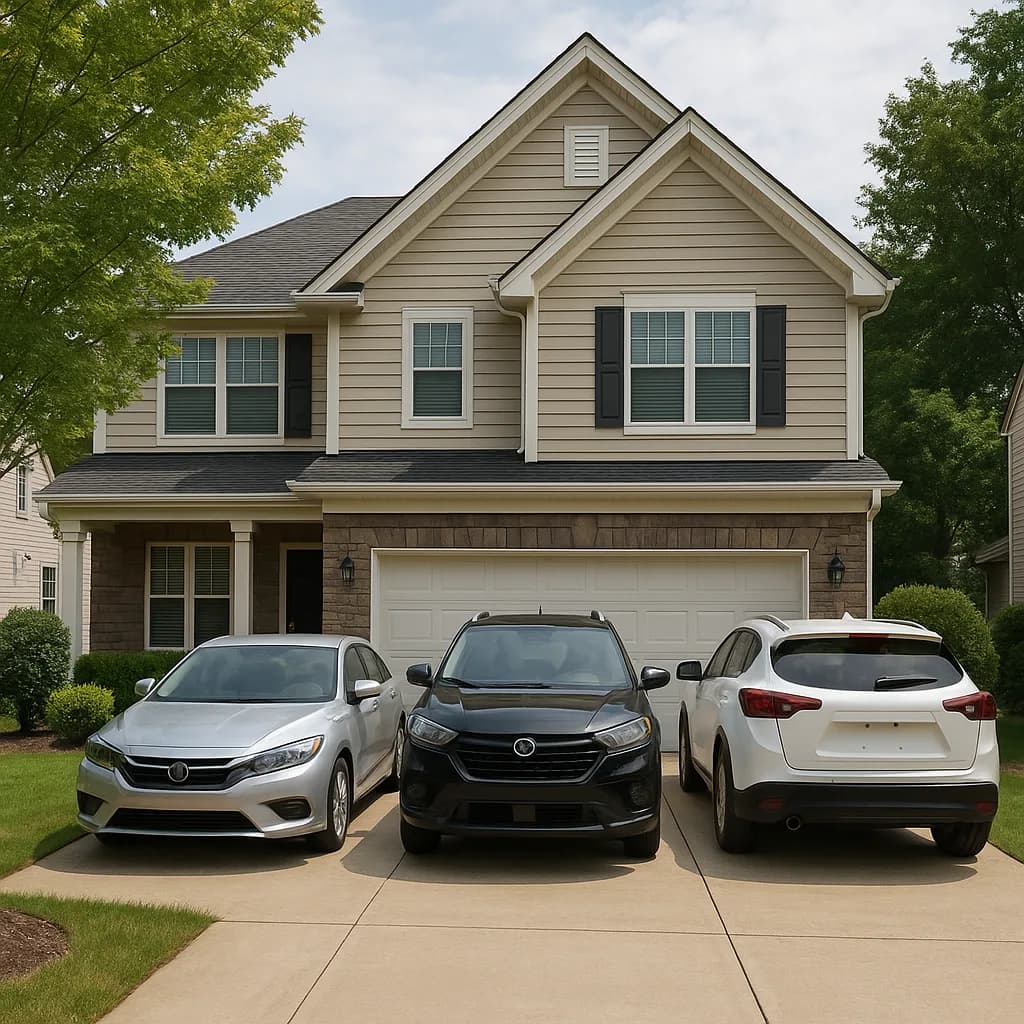
Start by listing every vehicle you want to insure: year, make, model, VIN, and garaging address. Gather the driver information for every household member who will drive any of the vehicles: license number, date of birth, and driving history for the past three to five years. Most carriers require this information for every driver in the household, even if they will not be listed as a primary driver on any specific vehicle. Incomplete driver information delays the quote or produces an inaccurate premium that changes once the carrier pulls motor vehicle records.
Request quotes from at least three to five carriers in the Illinois roster. Enter every vehicle and every driver on each application so the carrier's system applies the multi-car discount and any driver-specific surcharges or discounts correctly. Compare the final combined premium for identical coverage limits across all vehicles. The cheapest carrier is the one with the lowest total premium after all discounts, not the one advertising the largest discount percentage or the lowest single-car rate.
Related Articles






State Minimum Versus Full Coverage for Multiple Vehicles
Illinois minimum liability coverage ($25,000/$50,000/$20,000 plus uninsured motorist) protects other drivers if you cause an accident, but it does not pay to repair or replace your own vehicles. Full coverage adds collision and comprehensive to every car on the policy, covering damage to your vehicles from accidents, theft, weather, and vandalism. The decision between minimum and full coverage changes the combined premium significantly, and the cheapest carrier at minimum limits is not always the cheapest at full coverage.
Carriers price collision and comprehensive differently. A carrier that writes the lowest minimum-liability premium for three vehicles may charge more for full coverage than a competitor whose minimum-liability quote was higher. If any vehicle on your policy is financed or leased, the lender requires collision and comprehensive on that vehicle. You can carry minimum liability on the other vehicles, but mixing coverage levels on the same policy complicates claims and may eliminate eligibility for certain multi-car discounts.
Compare quotes at both minimum liability and full coverage for every vehicle. If you own all your vehicles outright and their combined value is low, minimum liability may be the most cost-effective choice. If any vehicle is financed, leased, or worth more than a few thousand dollars, full coverage protects your household's assets better than minimum limits. The cheapest carrier depends on which coverage level you choose.
Illinois Liability Minimum
Illinois requires $25,000 bodily injury per person, $50,000 per accident, and $20,000 property damage on every vehicle. Uninsured motorist coverage is mandatory.
Illinois Secretary of State
Adding or Removing a Vehicle Mid-Term Re-Rates the Policy
Adding a vehicle to your Illinois policy mid-term does not simply add a flat amount to your premium. The carrier re-rates the entire policy, recalculating the multi-car discount and the base rate for every vehicle based on the new total. If you bought a third car and added it to a two-car policy, the premium for all three vehicles may be lower per car than the premium for two vehicles was, because the multi-car discount increased. If you removed a vehicle, the remaining cars lose part of the discount and the per-vehicle premium rises.
Most carriers provide a grace period (typically 14 to 30 days) during which a newly purchased vehicle is automatically covered under your existing policy at the same coverage level as your other vehicles. You must report the new vehicle to the carrier within that window to keep coverage active. Missing the grace period can result in a coverage gap, and a claim on an unreported vehicle may be denied even if the accident happened during the grace period.
Compare Illinois Carriers That Write Multi-Vehicle Policies
Twenty-seven carriers write multi-vehicle policies in Illinois. The roster includes preferred-tier carriers like State Farm, Allstate, and Auto-Owners; standard-tier carriers like Geico, Progressive, and Farmers; and non-standard carriers like Bristol West, Dairyland, and The General. Online-first carriers like Root and Clearcover write multi-car policies and offer app-based policy management. Not every carrier writes in every county, and some carriers restrict eligibility based on driving history or vehicle type.
The cheapest carrier for your household depends on how many vehicles you insure, the coverage level you choose, the drivers in your household, and the garaging address. A carrier that writes the lowest premium for two sedans in Cook County may not be the cheapest for three SUVs in Sangamon County. Request quotes from multiple carriers, enter every vehicle and every driver on each application, and compare the final combined premium for identical coverage. The Illinois Department of Insurance does not publish carrier rate comparisons, so the only way to identify the cheapest option is to quote directly.